IndustryJanuary 8, 20255 min read
Why Multilingual Menus Matter in 2025
With international tourism booming, offering menus in multiple languages isn't optional anymore.
The Global Dining Landscape
International tourism has recovered strongly since the pandemic. Cities like Barcelona, Paris, London, and Dubai see dining as a central part of the travel experience. Yet most restaurants still serve menus in only one or two languages, creating friction for a significant portion of their customers.
Language barriers don't just cause confusion: they reduce spending. When customers can't fully understand a menu, they default to safe, recognizable choices rather than exploring premium dishes or chef specials. A guest who understands what a dish is feels far more confident trying it.
Beyond Google Translate
Handing customers a poorly translated menu is worse than no translation at all. 'Grandmother's slow-cooked lamb' becoming 'Old woman's delayed sheep' doesn't just fail to communicate: it actively damages your restaurant's image. Culinary translation requires understanding of food terminology, cultural context, and appetizing language.
AI translation technology has improved dramatically, but menus are a special case. A good translation knows that 'confit' should usually remain 'confit', and that dish descriptions need to sound appetizing rather than merely accurate. Treat any AI translation as a first draft: it saves a lot of typing, but someone who knows the language and your food should check it before guests see it.
Implementation Strategy
Start with your most common guest languages. Check your reservation data, tourist board statistics for your area, and simply observe which languages you hear most often in your dining room. For a restaurant in Barcelona, Spanish, Catalan, English, French and German are a common starting point.
Use AI translation as your foundation, then have native speakers review the output. In ComidaQR you translate each dish, section or menu name and description with one button, and you can edit every field by hand. Each translation carries a status (manual, AI draft or reviewed), so you always know which items have been checked. Allergen and built-in dietary tag labels are already translated into all 22 languages.
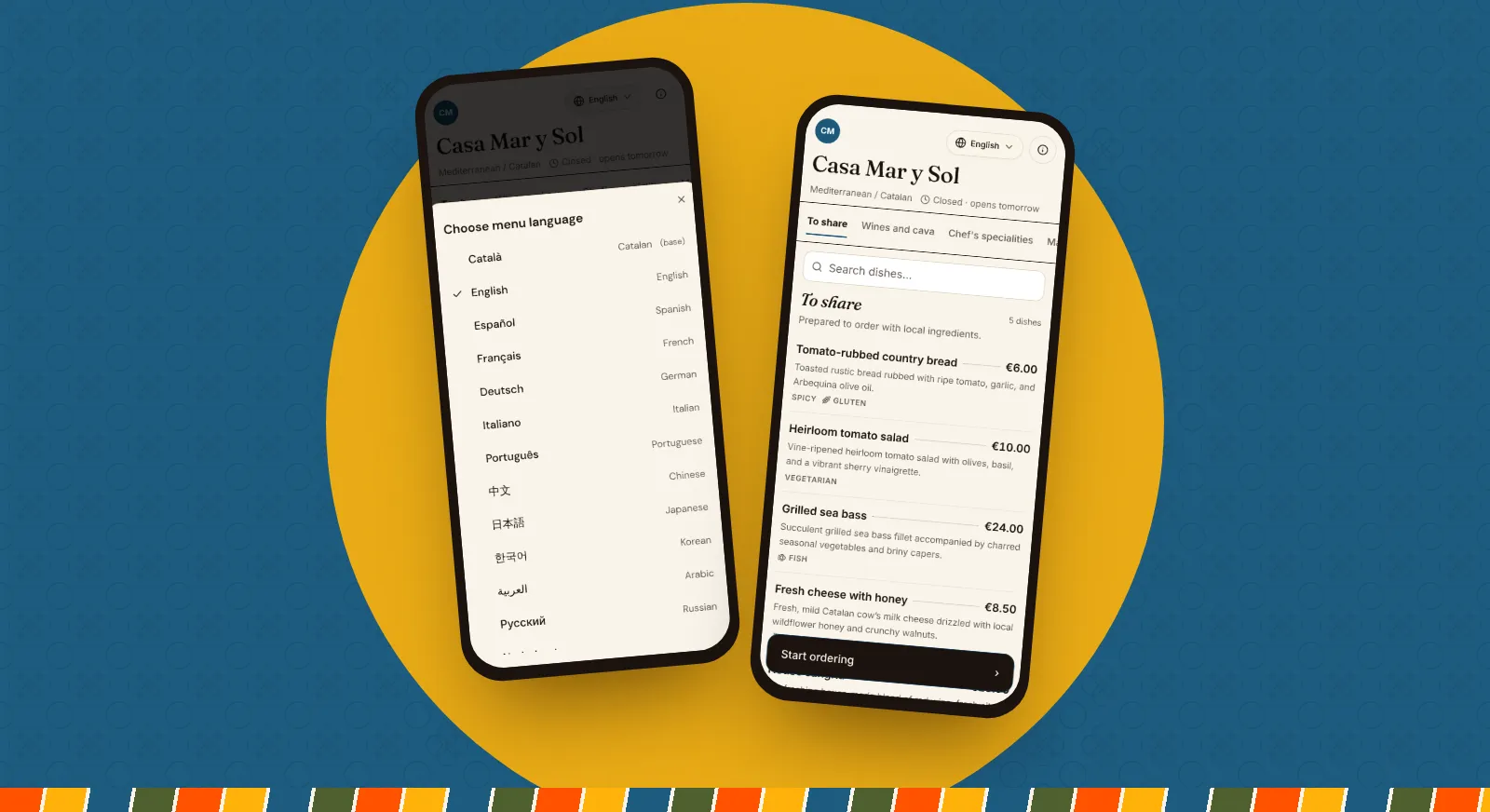
The guest experience should be simple. When a Japanese tourist scans your QR code, the menu opens in your base language and a clearly visible language button lets them switch to Japanese with one tap. Make sure that button is easy to spot, so nobody gives up before finding a menu they can actually read.
The ROI of Multilingual Menus
The return on investment comes from several directions. Guests who understand the menu order with more confidence, international visitors have fewer reasons to complain in online reviews, and word of mouth spreads within tourist communities.
You can check the effect yourself: compare spending and reviews from international tables before and after you add their languages. With AI-assisted translation, the cost of getting started is small, so the bar for the investment to pay off is low.